(excerpt from my memoir)
This long testimony comes with a CONTENT WARNING for sexual violence. I don’t mean this in a colloquial sense, but an actual warning to anyone who’s been traumatised. Stories of abuse can trigger symptoms of post-traumatic stress, and exposure to such material should be conscious, and at a time and place we decide we can safely engage with it.
. . .
When I was a fourth year medical student, I was raped by my GP during an appointment. Tonight is the 26th anniversary of that event. There are many events in my life that I have no desire to share with the world, but this event and its aftermath, I’ve felt compelled to speak about for over twenty years, but haven’t. I debated with myself many times, whether to do it or not. The reasons not to do it are many, and especially now, when I am present online under my real name. With so many eyes reading my words, the stakes seem higher than ever. I don’t want this testimony to define me. I don’t want my future opportunities to be affected by this. I don’t want the work I did so far to be dismissed. I know that these are all real possibilities, likelihoods, even. And yet, my urge to share it hasn’t abated in all this time. I feel that deciding to never share it is not an option I would choose of my own volition. It could only arise from me faltering, year on year.
The main reason I am sharing this, is to raise awareness. Over the years, I have kept an eye on the issue of female medical students and doctors being sexually assaulted by male colleagues. It remains a serious and ongoing problem in our profession, and women are not getting justice. In fact, women who speak out are routinely bullied, silenced and threatened with a loss of their career and good standing. The medical establishment is quick to label female sexual assault survivors as “unstable”, and even bring their fitness to practice into question on that account alone. It is hardly a surprise, then, that when female medics do speak out, it’s usually the bare minimum. A male doctor sexually assaulted her. It was a nightmare getting anyone to listen. She had to go off sick for a period of time and has now either left medicine or moved on to a less demanding job, her wings clipped, while her abuser continues to thrive in his chosen career. Consequently, everyone can continue to imagine that there was always something wrong with her. She asked for it, she provoked it, she wasn’t careful enough, and in the aftermath, why is she fixating on an unpleasant event that took a few minutes or hours? Why can’t she just move on? Why dwell on something so horrible?
I guess all these are reasonable questions and this is what I believe I can shed some light on, with my story.
I would like to thank every person who spoke of the horrors inflicted on them behind closed doors. Your courage, and the overall positive effect that shining a light has had on the abuse dynamics you experienced, inspired me to take this step. My hope is that by telling my story, I will re-define the anniversary of my rape, as the day I decided to free myself from guilt and shame for falling prey to a predatory male doctor. If my testimony helps to prevent one rape, or if it helps just one woman know that she is not alone, it will be worth it.
. . .
My family emigrated to Australia in the wake of Yugoslavian war. I was lucky to have had a brilliant education back home, I spoke English reasonably fluently, so I managed to get into medical school within a year and a half of our arrival. Those years are a blur now. I remember living alone in a terrible little flat behind a university teaching hospital, feeling very lonely and disoriented. I managed to pass all my exams on the first try, but I struggled to emotionally relate to people who spoke a foreign language. Possibly because English words neither generated mental images, nor emotional associations for me, people seemed two-dimensional and lacking in depth. I had superficial relationships with my fellow students, but all my close personal friends, and my boyfriend, were from the former Yugoslavia. This was how I met the male GP who first became my doctor, then my friend, and then, my rapist.
The relationship I was in wasn’t good. My boyfriend was entitled, sexually coercive and spoilt. However, he paid half the rent and contributed to the bills, and I needed the money in order to continue with my studies. My best friend had recently started a relationship of her own, and we drifted apart. But every year, more young people my age arrived from our home country, so I had a thriving social life and was starting to feel like I was finally on solid ground.
As the situation between my boyfriend and I became more difficult, I confided in my GP friend. He diagnosed me with depression and referred me to a female psychiatrist, who also spoke our language. She was in her mid thirties, and was renting a beautiful office on the second floor of an old church. She was cool, funny and she listened to me. But soon, she inserted herself into my social circle, and there seemed to be few boundaries. After various antidepressants didn’t relieve my sadness and distress, she asked me what would put a smile on my face. I said “a dog”. So she advised me to get one, and I did, a little abandoned female Australian Cattle Dog, who became my world. We weren’t allowed to keep dogs in my apartment building, but I did so anyway, and luckily the lady living upstairs, who looked after the building, was very fond of German Shepherds so she let me keep her.
I remained in the bad relationship, because outside of the sexual coercion and my boyfriend’s laziness, he was quite smart and we had some good times together, especially since our house was always filled with friends and their dogs. My GP friend visited us sometimes too. My boyfriend hated him, but that only made me want to invite my GP friend over more often, as a passive-aggressive resistance gesture. The GP also took on the role of my mentor, and I would frequently swing past his surgery on my way back home from university, to share my worries, funny stories and to seek his guidance.
Unfortunately, my exhaustion and low mood worsened, and by the end of the third year, I would fall asleep whenever I sat down. I simply could not shake off the tiredness anymore, so I went to see a doctor at our student medical centre. He asked me where I was from and I found myself telling him how I got to Australia. He was very empathic and said it was no surprise I was so exhausted. Perhaps I just needed to take it easy and rest more. By the time fourth year rolled around, I was so unwell I could barely get out of bed. With no other answers but “chronic exhaustion”, I decided to defer that year.
It was a convenient year to defer because the end of third year was a demarcation between the pre-clinical and clinical parts of our course. I envied my colleagues who used their year off to travel to places like India and China, to do degrees in exotic things such as alternative medicine. This was a peculiar privilege of being a medical student. We could do one year research and a thesis in any related science area, and we would be awarded a science degree as well. Although one of the guys I knew chose to do brain research, and found himself so traumatised by all the experiments on live animals that he got addicted to medical-grade heroin, overall, the programme was a huge success, and quite a few students took it. This also meant that several people from my original year would be there when I resumed my studies.
During my year off, I worked odd jobs to help supplement the benefits I was on, but I could still do very little. The arguments between me and my boyfriend escalated. Ostensibly, we argued about the war in our country and who had to work harder in our respective courses, but it was really all about the entrenched sexual abuse in our relationship. My GP friend compassionately listened to me, he prescribed me the oral contraceptive pill after I ended up having to have an abortion, and he gave me sensible advice, such as that I should not leave my boyfriend in a fit of anger, but to make sure I was making such a big decision with a clear head.
I started my fourth year in a slightly better position. I was living with my boyfriend and a dog in a new flat, near the beach. I had a car and a group of close friends. I still wasn’t fully recovered from whatever it was that floored me the year before, but I could just about manage to drag myself to the hospital, although I missed tutorials on occasion too. My psychiatrist was stumped as to what was wrong with me, but she never did any proper investigations. She was just upping and changing my antidepressant regime, until I was quite heavily medicated with tricyclics, lithium and thyroxine, which were meant to potentiate the effect of antidepressants. I assumed that I had just crashed from the stressful life events and the insane workload, and that it would take time for things to right themselves.
My GP friend took a special interest in me, and he took me out to parties organised by young people from ex-Yugoslavia. It was such a relief to hear my language spoken again, to hear our music, to laugh at all the cultural references that Australians simply didn’t get.
One of these parties was held in a bar on the Esplanade. I arrived early because my boyfriend had some time-sensitive experiments to attend to in his laboratory, and said he would join us later. We had a drink and my GP friend told me excitedly about a small attic flat with sea views that he purchased recently. He said the building was a ten minute walk from the bar, and asked if I wanted to see it. I said yes.
When we got there, I was a bit puzzled. He called it a “flat” but the space looked more like an ordinary attic that hadn’t been converted yet. It was dusty, with wooden beams and old cables criss crossing the space, but there was a large window from which you could see the sea.
Suddenly, a man I had not seen before, came forward from the shadows. He looked strange, almost as if he was salivating on the inside. My GP friend introduced me to him as just “a friend”, and instead of introducing himself, this man just grunted. I got a frisson of fear in me. Something wasn’t right. But having gotten used to acting my way out of dangerous situations, I became overtly friendly. I chatted and laughed, praised the attic, kept the topic on the renovations, and kept repeating that we should be getting back to the bar, because my boyfriend was expecting to find me there. I’m sharing this with the benefit of hindsight. I can see now how it all played out but at the time, I did not allow myself to acknowledge what was happening.
The men exchanged looks, and soon after, my GP friend escorted me out of the attic. We went back to the bar – the strange man did not join us – and me and my boyfriend left the party to go to a club.
A few months went by. My resolve to leave my abusive relationship solidified and as the spring was approaching, the days were warm and the flowers in bloom, I decided it was the right time to make my move. One Friday, I packed my bags and my dog, called a taxi and told my boyfriend that it was over. He was incredulous and wouldn’t let me leave until I agreed to give him until the following week to make changes he was certain would impress me. I agreed under duress, but I will never forget that short walk from my flat to the taxi cab. I felt something finally changed for me. I felt lighter, more hopeful and more confident than ever before. I had a lot of studying in front of me, but I had finally began to integrate into Australian society and medicine was no longer a puzzling mystery. For the first time I felt that I could do this, and with this realisation came a tantalising promise of independence and safety. I felt my old wounds starting to heal. I forgave myself for getting stuck in an abusive relationship for so long, and I was certain that the next partner I chose would be different. I drove to my mum’s house and I was given a room with a bed, a closet and a small tv. My family never liked my boyfriend, so they were glad that I had finally left him.
I remember feeling mixed emotions. I couldn’t stop crying, but I knew that this was a normal reaction to losing what could have been, as well as catharsis, having finally reached a place of safety. There was not a doubt in my mind that leaving was the right decision, and I had no intention of ever going back to my boyfriend.
I dropped in on my GP friend to tell him the good news, but instead of being happy for me, he was thoughtful and worried. He asked me if I was sure about this, and how I was feeling. I told him I felt absolutely knackered but really glad that I left. He accepted this and said, “Why don’t you come by the surgery, I can give you some vitamin B injections that will give you extra energy. I would do it now but I need to order them in. After the appointment we’ll go out and celebrate.” This took me by surprise. I wasn’t necessarily keen on getting injections, or celebrating. I just wanted to hole up and recover emotionally, but I trusted him, so I agreed. He booked me as his last appointment the next Monday, at seven-thirty pm.
The weekend passed uneventfully, that is, with me crying while watching anime cartoons to distract myself. When I came home from training in the hospital on Monday afternoon, I quickly got dressed in my best “going out” clothes, put on make up and drove to my appointment.
Going in, the female receptionist gave me an odd look, but I didn’t think much of it. When I entered his office, he told me to pull down my skirt and underwear and bend over the bed. Because of the large volume of injections, he needed to give me the shots into my gluteus muscle. Then he left the room to get something that he forgot.
When he came back, he said I was the sexiest thing he had seen all day. This made me feel uncomfortable but I chastised myself for even having such thoughts about a male friend who had shown me nothing but concern and kindness. I went into the jokey/diffusing the situation mode again and started chatting. Akira Kurosawa, a famous Japanese film director, had died the night before, so I asked him whether he heard about it.
I had long black hair and red lipstick, so he said that I looked like something from a Kurosawa movie. Then he gave me the first injection, followed by another, and then another.
I woke up on the examination couch. I remember lifting my hand and examining it against the lights. His voice seemed to be coming from afar. I couldn’t really understand what he was saying but I found myself following his commands anyway. He got me to stand up and then ordered me to take his penis into my mouth. I laughed at the odd, pencil-thin appendage, and that seemed to enrage him. So he forced me to my knees and shoved his penis in my mouth. I remember the rape in snippets. I was on the couch again and he was anally raping me. I floated into the upper corner of the room and watched, without feeling anything at all, how this man abused and degraded my body. When it was over, he showed me the red lipstick marks on his genitals and joked that his wife would kill him if he didn’t wipe it off before he got home. He used some kind of wipes and chemicals on my private parts, to wash them out. He was all nice again. He told me to get dressed and come to his office when I was ready. I still obeyed his every word, but now I was more alert and I realised that I had been raped. I did not dare speak this entire time.
I went into his office which was small and filled with books. He started talking and wouldn’t shut up for some time. I remember him saying how I wanted this, how I was his “little junky whore”, and how he would make sure that I had all the drugs I wanted. I remember wondering where he got this from, as I had never used hard drugs in my life. Then he pulled out a beautiful maroon leather doctor bag and said it was his gift to me. I took it and he escorted me, via a back door, to my car.
The car park was pitch black and I was still feeling drugged. He was going on and on about how his friends won’t believe that he slept with me and how they will be so jealous. I remember being terrified of driving. I was so weak. I couldn’t really lift the heavy bag to hit him with it, and I was worried that he would kill me if I showed any resistance. So even though I feared I would cause a traffic accident, I got into my car and drove away as fast as I could.
When I came home I ran into my sister. We weren’t on the best terms at the time. She asked me what was wrong and I said, “I think I was raped.” I couldn’t string a better sentence together but I needed her to take me to the hospital and then the police. Instead, she looked at me with scorn and said, “Don’t be ridiculous, of course you weren’t raped, look what you are wearing.”
I got my dog and went into my room, took all the clothes out of my closet and started mending them. I worked all night, sowing by hand, taking my skirts apart and sowing them back again. And in the morning, I went to the hospital as if nothing had happened.
When I came home later that day, I remembered a young man I had met in the dog park a few months earlier. He was sweet, he loved dogs and he had asked me out on a date. When I told him I had a boyfriend, he apologised, but said that the invite stands if I ever changed my mind. I was so desperate to recapture the feeling of hope, freedom and personal agency I had the Friday before I was raped, I called him. We went to a seaside cafe and had coffee and cake, followed by a walk on the beach. Then, we went back to his place. I was perplexed and had no feelings for him, or desire to be touched, but I felt compelled to erase any traces of that rapist, and I knew I didn’t want to go back to my abusive boyfriend. So we had sex, and the next morning, I went to the hospital again.
Wednesday was the day I was supposed to see my boyfriend. I still hadn’t slept a wink, and my mind wasn’t working very well, so I decided to skip hospital. My boyfriend asked that I give him a chance to redecorate our flat, in a mistaken belief that it was his lack of housekeeping, rather than his sexual abuse, that had put me off our relationship. I phoned and told him I couldn’t come because I was doing a late shift at the hospital, and then I went out with the guy from the park again. Only this time, instead of intimacy, he told me that he was a heroin addict, but not to worry because he just got tested, and that he was clean. Horrified, I went back home, just in time for an unimpressed phone call from a nurse from the hospital where I told my boyfriend I would be. She said he was there with flowers, and that I had to come and pick him up because he missed the last train back to the city.
Humiliated and still disorganised, I drove all the way across town to get him. I was furious that he was pushing me and not taking no for an answer. He was livid because he could sense I was lying. It was a dreadful situation, but I dropped him off at our flat and went back to my parents’ place.
The next day I went to see my psychiatrist. I started to tell her what happened but suddenly, her demeanour changed from empathic to cold. She said that she didn’t know what I thought happened to me, but that my rapist was her friend, that they worked together, and that I needed to seek counselling with someone else. She turned her back to me and stayed like that, until I left her office.
When I got home, I phoned a friend of mine. She and her boyfriend, and me and my boyfriend, were “couple friends” and have grown close in recent months. I told her what happened and she replied – very cheerfully – that it was amazing that I had “slept with that handsome doctor”. I wasn’t sure why I couldn’t make her understand what really happened, so I drove to her house. I tried to explain to her and her mother, but they both just stared at me. Then, her mother fished a black velvet cape out of her closet, put it around my shoulders, and escorted me to my car. She told me to never come back to their house again.
The world was closing in on me at this point. I had nowhere to turn. It was Friday again, four days since the rape. I had been with another man, and had countless showers since the assault. Nobody I spoke to believed me. I didn’t think there was any point in trying to report it to police. That is, I no longer knew what to think. I felt myself slipping into some kind of fugue state, when another friend of mine, who I hadn’t seen in some time, called to ask if I felt like having drinks in the pub we used to frequent. I agreed.
I arrived first. A band was playing but the sounds were muffled. I still couldn’t really follow music or conversation. I felt like I was under a glass bell. I bought a beer and, feeling so miserable I can hardly explain it, I started to drink. My friend arrived, and as soon as she saw me, she asked what the hell happened. Not having much faith in her response, I just said that the GP raped me. But instead of another rejection, she got angry and started to cry. She said he had done this to other women from our immigrant community, and that he propositioned her once but she told him to fuck off. It occurred to me that somewhere between then and now, he had refined his technique in order to get what he wanted, while making sure his victims had no recourse.
We parted ways later that evening and after I got home, I fell into my bed. I don’t know how many days I was in this state, probably the entire weekend, but my memory is hazy. I was plagued with lurid dreams of my assault, but in the dreams, I enjoyed the anal rape. I would wake up from this nightmare sobbing, feeling so disgusted with myself, questioning my sanity and remembering snippets of things he told me in the aftermath – that I enjoyed it, that I wanted it, that I was his “junky whore”. It was only the thought of leaving my dog behind that stopped me from trying to kill myself. I couldn’t walk or eat. I was swaying whenever I stood on my feet and the air felt liquid around me, colours swirling, my mind unreachable and distant. And then came the phone call.
My sister brought me the phone. Having initially dismissed me, she had finally realised something was wrong, so she stayed with me in the room. It was him. He was speaking like a man in love. He said he missed me terribly and begged me to reconsider our “relationship”. He professed his love several times. I remained silent. Eventually he told me that he left a “little something” under the welcome mat on my doorstep. I told him that if he ever contacted me again, he would regret it, and I hung up.
When I told my sister what he said, she ran outside to check. She came back with a white envelope full of morphine pills. She asked me what to do with it. I told her to throw them away, and I went back to bed.
The following week, I tried to contact my boyfriend but now he was the one who wouldn’t speak to me. He said a friend of mine – the one whose mum gave me the cape before sending me on my way – had told him that I cheated on him “with that handsome doctor”. Suddenly I could not stand this lie. I begged him to believe me that I did no such thing, that I had been drugged and raped and that she was lying to him. He agreed to meet me in a pizza restaurant, to discuss the future of our relationship. I remember crying over a terrible pizza, trying to explain what happened, and begging him to take me back. Eventually he agreed, but instead of taking me back to our flat, he took me to a highway motel. He paid for a room and proceeded to rape my body for hours. He’d been abusing me for years by that point, but this was more vicious than ever before. I said nothing and just endured, understanding that this was the condition of him taking me back. Afterwards, we went to our flat. He told me that the friend who lied that I had cheated on him, also tried to seduce him several times. He still didn’t believe that I had been raped.
All this coincided with the beginning of the last clinical rotation of the year – psychiatry. I had been reading on the subject avidly, and even though I was in a terrible state psychologically, I was looking forward to this since the beginning of my studies.
We were each assigned a patient that we would do a case study on, in addition to the usual written and viva voce exams. My patient was a young woman with a diagnosis of borderline personality disorder, who was admitted following multiple suicide attempts. She self-harmed prolifically and had fallen out with close people in her life due to terrible temper tantrums and self-destructive behaviour. Reading her file, one might have thought she was either “mad” or “bad”, but I found her to be intelligent, sensitive and insightful. She alluded to a history of childhood sexual abuse but could not talk about it. Instead we talked about her CBT and issues she had adhering to the methods designed to help her control negative thoughts and impulsive behaviour. This was a young woman who was hurting and struggling with dissociation, but she felt that she had been dismissed as “difficult” by the male psychiatrists who ran the unit. We developed a rapport and in being there for her, I started being able to move the turmoil in my life to one side, and focus on my job.
I had no problems memorising the material. I soaked up every bit of knowledge like a sponge, and even though I had become very reserved (I no longer volunteered answers and kept myself to myself) I worked hard on writing up her case.
At home, my grandparents became so concerned about me, that they decided to cheer me up by taking me on a trip to New Zealand after my exams. So, one sunny afternoon, my sister and I decided to drive to the city to get our passports. My dog, however, was having none of it. She was normally quite sensible, but every time I approached the car, she went crazy in the porch, barking and clawing at the glass. I had never seen her behave like that before. After going back and forth several times, to pet and reassure her, I was running out of time, so I ignored her and got into the car.
I woke up on a stretcher, in a nearby hospital, dazed and confused. The medical registrar, a young Indian man, told me that I had a grand mal seizure in the car, just before I turned the key in the ignition. I started to sob, my first thought being “thank god I wasn’t already driving” and my second thought, fear that I wouldn’t be allowed to graduate. He was very sympathetic and reassured me immediately that there was nothing to worry about. Even if I had epilepsy, he said it would have no bearing on my suitability as a doctor. He wanted to exclude any potentially sinister causes, however, so he ordered a CT scan of my brain, and when that revealed no pathology, he sent me up to the neurology department to have an EEG (electroencephalogram). Luckily, the EEG only showed tricyclic and lithium toxicity. They asked me why I was taking these drugs, and I told them I’ve been on them for resistant depression but that I was actually feeling ok. They were stunned that I never had blood levels done, nor was I warned about the potential issues with toxicity. I felt rather stupid, because I had learned about this only recently, but I never connected the dots with regards to my own antidepressants treatment, and none of my doctors ever mentioned it. The neurologist discontinued my medication on the spot, prescribed sodium valproate, and told me that although it was highly unlikely I had epilepsy, I had to stop driving until I was seizure-free both on and off medication, for a period of time.
I briefly considered calling the psychiatrist to confront her about putting me and others in danger, but I couldn’t face it. I realised she was a predatory, unstable doctor who was aiding a rapist, and who was neglectful of her own patients. I imagined how other women must have felt, going between these two who were covering for one another, and I had a chilling realisation: I would probably not have a leg to stand on if I reported them. They already diagnosed me with a serious and resistant mental health condition, drugged me up to my ears, and would have been free to fabricate a bunch of lies to protect themselves. This was a different time, notes were written on paper and there would have been no audit trail or time stamps, showing that records were changed retrospectively. At this point, at least I still had the hope of becoming a doctor one day, and I wasn’t going to let anyone take that away from me. So I asked a few students from my group if I could carpool for the rest of the term, and resolved to focus on passing my exams.
I become even more withdrawn, and I started to feel odd most of the time. I became jumpy and would frequently find myself staring into space, which attracted odd looks from a couple of male psychiatrists. One might think that someone would ask me whether I was ok, but instead, the two men started gunning for me. They became rude and dismissive when addressing me, and when I turned in my case report, they accused me of getting one of the registrars to write it for me. They claimed there was no way someone at my level could have produced a report of such quality. I begged them to ask the registrars, swore that I had no help from anyone, but they had made up their minds and threatened to fail me on my report. I was devastated. Then came the viva.
I entered the room with apprehension. At this point I didn’t care what mark they gave me, as long as I passed. I had never failed an exam before, and didn’t intend on failing this one either. I remember being asked increasingly difficult questions and the viva being much longer than the allocated 15 minutes. Eventually, I found myself aggressively quizzed on obscure side effects of psychiatric drugs. This was way beyond my level, however, the examiner – an old psychiatrist with white hair who had accused me of cheating on my report – seemed invested in “exposing” me. Finally, when he ran out of questions and fell silent, a female registrar smiled at me and indicated that I should leave the room.
We all waited to find out our results before we went home for the day, and I received mine last. It took long deliberation, apparently, and the old man wanted to fail me regardless of my exam performance, but he couldn’t justify it in front of the female reg. I was given a credit, a grade better than a pass, which was certainly more than I expected under the circumstances. Finally the fourth year was over and I could rest for the summer.
If you think all this sullied my love of psychiatry, you would be mistaken. It only made me more determined. I was proud of not crumbling under pressure, and I really enjoyed the course work. Moreover, I realised there was something very wrong with psychiatry, and medicine in general. There was so much sexism and gratuitous discrimination against women in our field, who were facing unique challenges simply for being female. Male doctors were just as likely to be blinded by misogyny as any other man. I gained an understanding that I was on my own, but also, that I didn’t really need anyone. I could do this, as long as I flew under the radar until I felt better, everything would be okay.
Fifth year came around and with it a placement in Obstetrics and Gynaecology. I was assigned to a male professor whose special interest was IVF. He was a no-nonsense Aussie; sarcastic, sexist, and he found my eagerness to pull him up on his inappropriate remarks rather amusing. He was a really good teacher, though. He would pose a difficult question and send me off to have lunch, and read the books to try and figure out the answer. When I returned, he’d quiz me, and if I got things wrong, he’d patiently explain why. He encouraged me to assist in the theatre too, and even got everyone to applaud after I neatly completed a routine procedure, which really boosted my confidence. I had been concerned how I would manage without my car, trying to hop between hospitals and lecture theatres in a very sprawled out city, but I found myself really enjoying this rotation.
One day, I was sitting in the tearoom during lunch. The Prof had forgotten to give me an assignment, so I was browsing journals that lay on the table and eavesdropping on him and his colleague discussing upcoming job interviews. The clinic was becoming very busy, and they needed another pair of hands. There was a third doctor working with them – a woman. She was very beautiful and fashionable, with an intelligent forehead and caramel skin. Her hair and makeup were always impeccable and she wore designer suits and stiletto heels. She could usually be seen dashing around the corridors, her breath quick, loose strands of hair stuck to her forehead, looking harassed and juggling a bunch of medical notes. Today was no different. While the two men talked about the physical appearance of the candidates – they wanted someone “easy on the eye” that would appeal to the wealthy clientele (never mind that the two of them looked like a shrivelled apricot and a bridge troll) – the female consultant was running around doing all the work. As I struggled to pretend that I was engrossed in the journal, the Prof cast amused glances at me. It felt like a message: This is your place in medicine as a woman. You need to look good and be a subservient work horse. You will never be an equal. And if you think that sexism and objectification end once you graduate, or once you pass your specialty exams, you are kidding yourself.
I never said anything to the Prof. I knew that, as a woman, I could either take it or leave medicine, because nothing good ever came from raising the issue of medical sexism with male colleagues. I believed it was an anachronism that would eventually disappear, when all the old boys retire, but I couldn’t just shrug it off.
I think this was because, although sexism thrived in every area of medicine, male gynaecologists seemed particularly egregious about it. It was the 1990s, we were meant to be living in the “post-feminist age” where women were equal to men, and we could do anything we wanted with our lives. However, the field centred on the most sensitive area of women’s health, appeared full of grubby men who seemed to have jumped out of a 1970s sexist sitcom. Older ones had old-fashioned prejudices about women, and were often unprofessional when discussing women’s private parts. Younger ones, while a lot more professional, still had no frame of reference to truly understand what their female patients were going through.
The hardest part was seeing how these dynamics played out on labour wards. I’ve seen pregnant women be insulted, dismissed and not given adequate pain relief. This sometimes resulted in adverse outcomes. I don’t mean to imply that this was an overwhelming problem. Most women came in, gave birth, and went home with healthy babies. But too often, there was a feeling of these women battling prejudice among healthcare staff, as well as battling to survive through a gruelling process of birthing a child. They were not always looked after as well as they could have been, and there were never any guarantees that one member of staff or another wouldn’t traumatise them, either with unsavoury remarks, lack of care or a botched job stitching up a tear, or an episiotomy.
It was at this point, that my condition started to deteriorate. During one afternoon, at the end of a general practice tutorial, a male GP thought it would be fun to get us all to experience guided meditation. We were all instructed to close our eyes and he started to speak in soothing, monotonous voice, telling us what to do. As I sat there, my eyes firmly shut, I spiralled into a panic. I wanted to leave, but I felt that I was in such danger, that I must under no circumstances reveal to anyone how I felt. When it was over, I bolted out of the room immediately, and after that I started to avoid tutorials.
I continued to diligently attend anything relating to psychiatry, but unfortunately, it wasn’t long before I couldn’t keep it together even in that context. I remember a tutorial on anorexia nervosa, that was a part of our paediatrics rotation. Due to our upbringing, my siblings and I all struggled with disordered eating, but my sister got so thin, that I was really worried about her. I’d been racking my brain how to help her, and I was eager to hear anything that might help me understand her condition. But instead of being able to focus on the valuable insights the female psychiatrist was offering, I spent the better part of the lecture desperately holding back tears. When it was over, I was so distressed that I didn’t dare get up. I shuffled pages in my ring binder, and waited for everyone to leave, so that I could let it all out. The female psychiatrist remained in the room. When the last student left, she sat next to me and touched my hand. I started to cry and I told her about my sister. She asked me if I wanted to speak to someone and I said yes, thinking that I would be speaking to her. But she had another colleague in mind, a man.
I had no preconceptions going to see him. He had an office not too far from where I lived, and he was professional and kind. However, during that appointment, I suffered another silent panic attack. I remember him looking puzzled, trying to coax answers out of me, but I just minimised and deflected. When he tried to make another appointment for me, I declined and ran out of his office.
I never went back to see him, but many years later, I finally connected the dots. I was reacting viscerally to men who were trying to get close to me – physically or psychologically – and this is why traumatised women need access to same-sex healthcare providers. I don’t remember this issue ever being discussed during my studies, though. Doctors are few and far between, and we are supposed to be guided by impeccable ethics. As long as a doctor is competent, that should be enough. Female patients who refused to see male doctors, were often seen as difficult and a potential liability. Accommodations were made, at times reluctantly, and some practitioners even believed that it was good to force women who were traumatised by male violence, to see male doctors as a form of “exposure therapy”.
In my opinion, this rather rotten attitude that medicine has toward female patients, stems primarily from men’s unwillingness to acknowledge the risk they, as a group, pose to women, and that no demographic of men is exempt from this fact. A male doctor, the ultimate figure of authority and benevolence, cannot be a rapist, a paedophile or a perpetrator of domestic violence. He simply cannot. And yet, he so often is exactly that.
When you are in the middle of it all, trying to learn and make your career in the medical profession as a woman, you quickly learn that the punishment for challenging patriarchal attitudes can be severe. So you set your instincts aside, you defer to your elders, and since even senior female doctors are conditioned to tolerate obvious misogyny in our ranks, you make yourself accept it. The medical hierarchy is clear, and male doctors are at the top of it. You can take it or leave it, but you are unlikely to change it.
My resolve to hide my feelings renewed, I still attended all my practicals in the hospital, but I found it harder and harder to focus, due to flashbacks and dissociation.
Back at my parents’ house, where I was still living with my dog, a family member was going through a mental health crisis and nobody was willing to deal with it. Our house became a gathering spot for relatives who needed respite, and us being from the Balkans, the conversations were loud and endless. Whenever I went to study, I could hear my father droning on and on, people yelling, doors slamming. I knew that if I didn’t get out, I would not pass my exams, but I didn’t want to go back to living with my abusive boyfriend, and I couldn’t afford a place by myself. I didn’t feel safe in the hospital library, especially after dark. I had to study so much that sticking to the day hours, or any sort of schedule, was just not going to cut it. There was so much to learn and revise, I often stayed up studying until I passed out over my books, in the small hours of the morning. I didn’t have many options and the time was running out.
I first went to the Dean’s office, to ask if they had any accommodation available to students who were facing homelessness. He offered me a small bursary and a room in hospital accommodation, but he said that dogs were not allowed. I told him that my dog was everything to me, but his demeanour changed and he asked me what was more important, my future or a dog?
I dragged myself out of his office with only one option left – join the military. This might seem like a bizarre conclusion, but I had already exhausted other options – none of the students I knew well were looking for a flatmate, and my grandparents had by this time returned to Croatia. I had several colleagues who had signed up for the military in first and second year, and they were receiving good money for it. They had to do officer training over the holidays, and the arrangement obliged them to a certain number of years of service after graduation, but I was so desperate that a distant possibility of being deployed to a war zone, still seemed less horrible than failing exams or abandoning my dog. So I attended recruitment. The military guy was very happy to have another doctor on board, and I passed all my tests. I was then told that the payments wouldn’t start for another eight months, and therefore, signing up would not resolve my immediate issues. In retrospect, I am counting my lucky stars, for obvious reasons, but at the time, I was crushed, because hard as I tried to escape my sexually abusive boyfriend, moving in with him was my only remaining option.
Sixth year was a bit of a blur. I did my best to show my face enough times that I wasn’t failed on attendance, but I was struggling. My boyfriend, dog and I were now living in a different flat, close to a different hospital. I was so stressed, I could no longer bear to sleep in the same bed as him, so I started sleeping on the sofa. A guy from my original year, who deferred for a year to do BMedSci, started to come around our house and we became friends. He was nice and would take my dog for a walk if I was in hospital until late. At some point, my boyfriend told him that I had been raped, and the two of them started to plan how to vandalise my rapist’s car, beat him up and write an anonymous letter to his practice to tell them what he was doing on their premises. I couldn’t bear for them to go to jail in case they got caught, so I begged them to leave it alone. My back started to spasm and I was bent over every few weeks. I started to cry a lot and became consumed with a sense of duty to do something to prevent my rapist from harming anyone else. I didn’t think the police would do anything, so I phoned the medical board.
I said I needed to report a doctor for sexual assault. The kind man who spoke to me took all the details. He was professional and sensitive. And then he asked me if I had a police report or the results of a rape kit. I told him I didn’t, and what happened that night after I got home. He sighed and said he was sorry, but without forensic evidence he couldn’t process my call as a formal complaint. He also warned me against openly accusing my rapist, because in the absence of concrete evidence, he could sue me for slander and ruin my life. He was empathic and I believe his advice was genuine. He seemed upset about my predicament. He promised he would keep my report on file, in case others come forward, but until that happened, there was nothing he could do.
I thanked him and hung up. Nobody was willing to protect other patients after all, including me. Because I still could have gone to the police and raised enough stink to warn others, but I decided not to because that was likely to put my career in jeopardy. I was weak, poor, without support and with my home country in flames. Becoming a doctor was my only way to a settled and secure future, and the graduation was just a few months away. So I chose myself over my rapist’s future victims. I don’t know what has haunted me more over the years, that I made this choice, or that I never entirely regretted it.
Soon after this, the situation in my house reached the breaking point. I could not bring myself to have regular sex with my boyfriend, and when he forced me to, I sobbed the whole way through. He never cared about my pleasure before, but this was too much even for him. His drinking escalated. One night, we started to fight about me being glued to the sofa. I had been unwell with the back spasm and worsening flashbacks, all the while having to study for my finals. He felt neglected because of this. I got up to leave the house with my dog, when my boyfriend pounced on me. He grabbed me by the throat and started to choke me, then he stopped and ran away.
I called the police, and some twenty minutes later, two officers attended. They wanted to know if my boyfriend was drunk, and whether he had done this to me before. I told them that he had been drinking, but this was the first time he choked me. They asked if I needed to leave the house. I wasn’t sure. They told me it was probably the drink, and programmed their emergency number into the house phone. After they searched the area and couldn’t find him, they left.
My boyfriend came back the next day, all apologetic and promising that he would never do it again. He said that he was struggling to cope with the way I had become. His coursework had also intensified, as he neared the end of his Honours year, but instead of working harder, he was spending more and more time on the internet. I remembered reading that there were support websites for family members of rape survivors, so I suggested that might be something he’d be interested in trying.
A month later, out of the blue, he got a very generous extension on his thesis, and he appeared a lot more relaxed and happy. I assumed that he was getting help online, but then I discovered this was not the case at all. He had become addicted to watching porn, and talking with women in sex chatrooms, instead. For a while, he was trying to talk me into accompanying him to sex parties. He said that I didn’t have to participate, just dress up and come with him, because they did not allow single men, only women and couples. I declined. Then, he said that he got his extension because he told his supervisor about my rape, and that this was the reason he had fallen behind on his coursework. His supervisor was very sympathetic. She took him under her wing – something he loved, being a spoilt mama’s boy – and promised him all the extensions he needed. It struck me how cruel it was that my abusive boyfriend should leach off my misery, and con his well-meaning supervisor in order to mitigate the consequences of his porn addiction, while I couldn’t find anyone to help or empathise with me at all. Still, I was grateful to have him off my back, so I kept quiet. I had lost all feeling for him and I knew that as soon as I was able, I was going to leave that relationship for good.
Shortly after, I found myself outside the Dean’s office again. I was so exhausted that I kept staring at the timetable which hung on the wall, but I couldn’t read a single word of it. I just stared at the blurry letters, the scent of hospital disinfectant in my nose, my heart pounding. I had very little spark left in me. I wasn’t angry or sad, just incredibly tired. So I went into the secretary’s office to ask for a copy of the timetable. I figured, if I looked at it outside the hospital, I would be able to read it.
She looked at me funny and asked what was happening. I said, nothing, but she wasn’t having it. She said I looked like a ghost, that she was a psychologist working on her PhD, and she made me tell her.
I told her I had been raped and that I was having problems focusing. She asked if I was sleeping, and I said, not really. She phoned a GP in my area and asked her to see me, with view to giving me a few sleeping pills. She said that I had to get proper rest and come and see her in a couple of days. I told her I didn’t have money for therapy but she said that the government sponsored 12 free sessions for trauma counselling, and therapists could apply for more. She had a network of colleagues, who were happy to see patients on a sliding scale, according to income.
Within a month, I was reasonably well-rested and matched with a wonderful young female therapist, and it was in her office that my long journey of healing finally began.
. . .
I would like to thank every reader who made it this far. I hope it was not too distressing to read, and that it has illustrated what effect sexual assault can have on the lives of women. It is my hope that this testimony will also contribute to an honest conversation about entrenched issues surrounding the topic of sexual abuse in medicine. If there is anything you’d like to say, please feel free get in touch via the contact form. Take care.
Maja
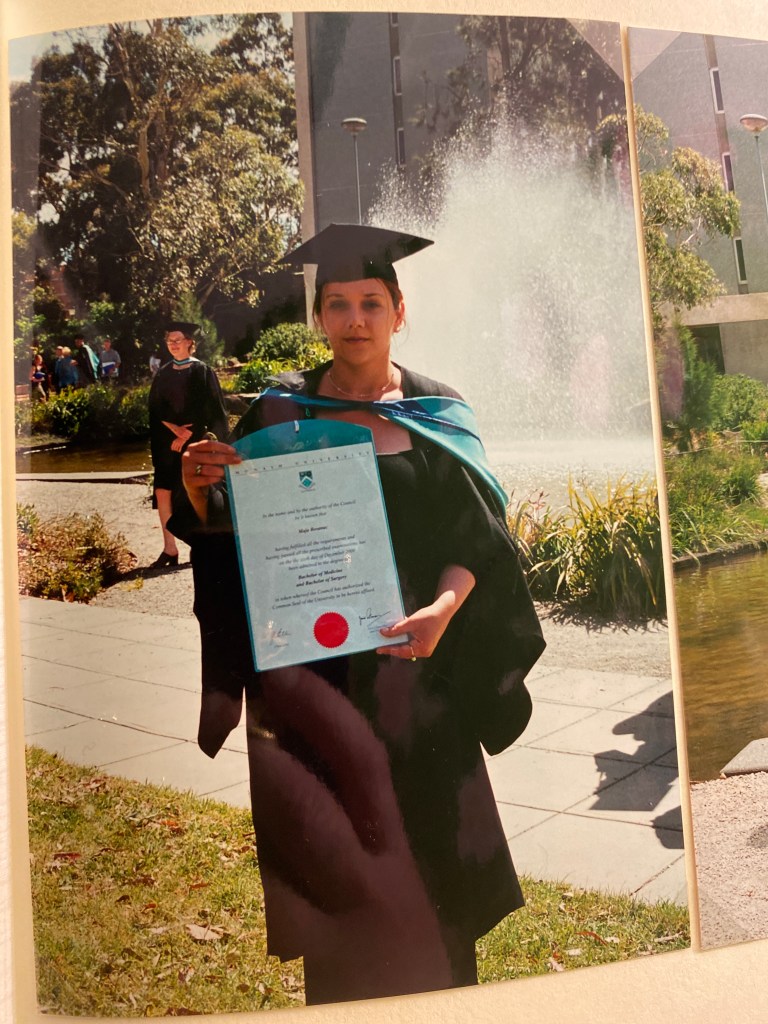
 la scapigliata